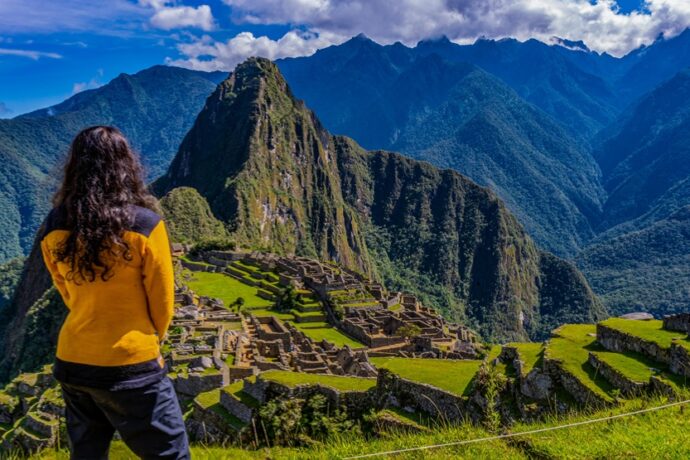
Hiking the Inca Trail isn’t just a trek, it’s a personal milestone. Reaching Machu Picchu on foot, like the Incas once did, is unforgettable. But this once-in-a-lifetime journey also comes with a price tag that’s often confusing or unclear.
Compare rates at 103 currency stores in 34 cities (free service)
How much does it really cost to hike the Inca Trail? Why do prices vary so much? What should you budget for gear, tips, meals, or porters? And how can you avoid losing money when exchanging currency in Cusco?
This guide answers all of that, and more. We’ll break down real numbers, smart tips, and common mistakes to help you prepare with confidence and make the most of your investment. Keep reading, because understanding the costs can mean the difference between a stressful trip… and the experience of a lifetime.
What is de Inca Trail?
The Classic Inca Trail is a 4-day, 26-mile (42 km) trek through the Andes to Machu Picchu. The only hiking route that leads directly to the ancient citadel. Once used by Inca rulers, this sacred path begins near the eastern edge of the Sacred Valley and remains the most iconic trekking experience in South America.
Quick Facts
- Location: Eastern end of the Sacred Valley, near KM 82 (Piscacucho)
- Distance: 26 miles (42 km) over 4 days
- Altitude: Ranges from 8,200 to 13,780 feet
- Difficulty: Moderate to challenging
- Best time: May to September (dry season)
Why is the Inca Trail so famous?
- Recognized globally as part of the Qhapaq Ñan, the Inca road system (a UNESCO World Heritage Site since 2014), and consistently named among the world’s top treks by respected travel magazines, TripAdvisor ranks it as one of the best multi-day experiences globally, Travel + Leisure and National Geographic praise its cultural and natural significance.
- To protect its cultural and natural value, access is limited to 500 people per day (including staff), and permits often sell out 6 months in advance.
Is the Inca Trail worth it?
Compare rates at 103 currency stores in 34 cities (free service)
Absolutely, for most travelers. Here’s why:
- Enter Machu Picchu on foot, through the original Sun Gate, just like the Incas did, no other trek lets you arrive so authentically and dramatically.
- Dozens of Inca ruins dot the trail: Llactapata, Wayllabamba, Runkurakay, Sayacmarka, Phuyupatamarca, Intipata, Wiñayhuayna, each a window into ancient civilization.
- Rich biodiversity surrounds you: cloud forests dense with orchids, hundreds of bird species, even elusive spectacled bears.
- A four-day physical and emotional challenge, strenuous but non-technical, achievable with moderate fitness and preparation.
- No other South American trek combines deep history, architectural marvels, Andean wilderness, and emotional impact quite like this.
If you’re looking for the real experience, the Classic Inca Trail is still the one to beat.

Steep Inca Trail steps with hands and feet
Classic Inca Trail 4-day itineray
Day 1: Cusco – KM 82 – Wayllabamba
The trek begins with an early morning drive from Cusco to KM 82. The hike follows the Urubamba River, passing the archaeological site of Llactapata, before gradually ascending to the village of Wayllabamba.
- Distance: ~12 km (7.5 mi)
- Hiking time: 5–6 hours
- Max altitude: ~3,000 m (9,840 ft)
Day 2: Wayllabamba – Dead Woman’s Pass – Pacaymayo
This is the most physically demanding day. You’ll climb steadily to Dead Woman’s Pass, the highest point of the trail, then descend sharply to the Pacaymayo campsite.
- Distance: ~12–13 km (7–8 mi)
- Hiking time: 6–8 hours
- Max altitude: 4,215 m (13,780 ft)
Day 3: Pacaymayo – Phuyupatamarca – Wiñayhuayna
A long day of trekking with multiple archaeological sites and two mountain passes. You’ll walk through cloud forest and descend ancient stone staircases to Wiñayhuayna.
- Distance: ~14–16 km (9–10 mi)
- Hiking time: 8–9 hours
- Max altitude: ~4,000 m (13,100 ft)
Day 4: Wiñayhuayna – Sun Gate – Machu Picchu
The final stretch begins before dawn to reach the Sun Gate at sunrise. After your first breathtaking view of Machu Picchu, you’ll continue down to the citadel for a guided tour.
- Distance: ~5–6 km (3–3.7 mi)
- Hiking time: 2–3 hours
- Max altitude: ~2,700 m (8,858 ft)
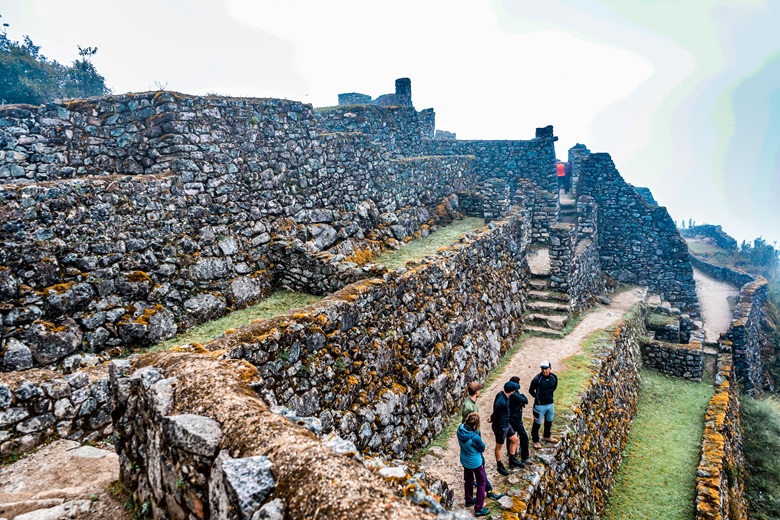
Hikers at the edge of stone Inca ruins
Inca archaelogical sites along the trail
- Llactapata (Patallacta): terraced farming city visible on Day 1. Likely supplied food to Machu Picchu and controlled access to the Sacred Valley.
- Runkurakay: circular watchtower on a mountain pass. Served as a checkpoint and shelter for travelers.
- Sayacmarka: clifftop settlement with narrow paths and ritual buildings. Likely a spiritual and strategic post.
- Conchamarka: minor site near Sayacmarka. Possibly served as support housing or storage.
- Phuyupatamarca: “The Town Above the Clouds.” Known for ceremonial fountains and panoramic mountain views.
- Intipata: steep agricultural terraces used to grow food. Offers stunning views of the Urubamba Valley.
- Wiñayhuayna: “Forever Young.” A major site with temples, terraces, and ritual fountains near the trail’s end.
- Inti Punku (Sun Gate): historic entrance to Machu Picchu. Inca pilgrims saw the citadel from here for the first time.
- Machu Picchu: the iconic Inca citadel. Hidden for centuries, it blends sacred architecture and astronomy in a dramatic mountain setting.
Real costs of the Inca Trail
Classic 4-Day Inca Trail
Two Main Budget Types:
- Standard operators: $750–950 USD
Includes permits, bilingual guide, porters, meals, camping gear, and group transport. Good value for most travelers. - Premium operators: $1,000–1,800 USD
Smaller groups, superior tents, gourmet meals, personal porter included, pre/post-hotel, and extras like oxygen or massage tents.
Price Comparison by Service Level
| Service Level | Price Range (USD) | Group Size | What’s Included |
| Standard | $750–950 | 2–12 people | Shared tents, decent meals, bilingual guide, group porters, basic logistics |
| Premium | $1,000–1,800 | 2–8 people | Better tents, gourmet food, personal porters, hotel nights, private transfers, wellness extras |
All packages include the government permit, professional guide, meals, porters for group gear, and basic camping equipment. The key differences lie in the comfort level, staff-to-hiker ratio, and extra services in Cusco.
Short 2-Day Inca Trail (KM 104 to Machu Picchu)
- Standard group service: $480–650 USD
- Private service: $650–1,200 USD (based on group size)
2-Day Trail Quick Facts:
- Distance: 10 km (6 mi)
- Difficulty: Easy to moderate
- Permits available: 250 per day (easier to book)
- Includes: Final stretch of the Classic Trail + Sun Gate entry to Machu Picchu
- Best for: Travelers with limited time or physical constraints
What’s Included in Most Standard Packages
- Government-issued Inca Trail permit + entrance to Machu Picchu
- Bilingual professional guide
- All meals during the trek
- Group camping equipment: tents, mats, kitchen gear
- Porters for group gear
- Roundtrip transport: Cusco – trailhead, Aguas Calientes town – Cusco
- First-aid kit and oxygen bottle (group-use)
Optional add-ons and extras
Personal Porter
- Cost: $80–120 USD per trek
- Weight limit: 5–9 kg (15–20 lbs)
Gear Rental in Cusco
- Trekking poles: $10–30 USD
- Sleeping bag: $15–30 USD
- Duffle bag: $15–25 USD
Tipping Guidelines (Customary, not mandatory)
- Guide: $10–15 USD per person per day
- Cook: $8–12 USD per person per day
- Porters: $8–10 USD per person per day
- Estimated total tips: $50–70 USD per person for the full trek
- Tip in cash (soles preferred, small bills). Collection is usually done on Day 3, coordinated by the guide. Guides are tipped separately at Machu Picchu on Day 4.
Note: Tipping is not mandatory, but it is a well-established custom in the trekking industry in Peru. It’s considered a meaningful way to thank the crew for their effort and service.
Additional Costs to Expect
Always review what’s included in your tour package. Some operators cover round-trip train tickets, bus up to Machu Picchu, and even hotel nights in Cusco, while others may charge separately.
These extra costs will depend entirely on what your chosen agency includes in their Inca Trail offer.
- Bus Aguas Calientes to Machu Picchu (round trip): $24 USD
- Huayna Picchu or Machu Picchu Mountain entry (optional): $85 USD approximately.
- Return train ticket to Ollantaytambo: $80–180 USD (depending on time/class)
- Meals and lodging in Cusco (pre/post trek): $30–100 USD/day depending on preference
Currency exchange un Cusco
If you’re heading to Cusco for the Inca Trail, managing your cash efficiently is just as important as packing the right gear. From tipping porters to buying snacks along the trail, you’ll need soles, and knowing where and how to exchange your dollars can save you time, stress, and money.
What to Expect
The real exchange rate hovers between 3.70 and 3.80 soles per US dollar. However, tourist areas often advertise rounded, misleading rates like 3.0 or even 2.8, especially at airports or hotel counters. Accepting those can mean losing 15–25% of your money.
Where to Exchange in Cusco
For the best value, use casas de cambio in central Cusco. These are safe, quick, and don’t charge hidden fees.
Top recommended zones:
- Ayacucho Street (near Av. El Sol): Local favorite, best rates in town.
- Avenida El Sol: Reliable, lots of competition to compare rates.
- San Blas and Plaza San Francisco: Good alternatives, quieter and convenient.
Avoid airport kiosks, hotel desks, and unregistered street changers. The rates are poor and the risks higher.
Using ATMs: Pros & Cons
- ATMs are convenient, but fees add up. Expect to pay $3–5 USD per withdrawal, plus what your own bank charges. Most machines have withdrawal limits of $200–400 USD equivalent per day.
- Best ATMs: BCP, Interbank, Scotiabank, located in the Plaza de Armas and along El Sol.
Avoid smaller ATMs in markets or side streets, where outages and errors are common. - Pro tip: Withdraw the maximum allowed before starting the trek, and always carry backup cash in small soles bills for tips and trail expenses.
Before You Travel
- Bring new, undamaged USD bills, old or torn notes are often rejected.
- Exchange in Cusco, not in Ollantaytambo or Aguas Calientes, where rates drop drastically.
- Compare rates at 2–3 houses before exchanging large amounts.
- Exchange smaller amounts progressively if you’re unsure.
How Cambiator helps you stay ahead
At Cambiator.es, we help smart travelers avoid poor exchange rates, hidden fees, and unnecessary financial stress. Whether you’re preparing for a four-day trek to Machu Picchu or planning a full trip across Peru, we give you the tools to stay in control of your budget.
- Up-to-date exchange rate data for Cusco and other key cities
- Verified casas de cambio, trusted by locals and experienced travelers
- Practical tips for handling cash safely on and off the trail
- Personalized advice to plan your soles and dollars before you even pack
Ready to get more value for your money? Let Cambiator help you plan smarter, so your Inca Trail experience is defined by awe and adventure, not by exchange rate mistakes.
Planning to hike the Inca Trail?
The Inca Trail is not just about getting there, it’s about doing it well. Four days of altitude, effort, and ancient history demand more than good intentions. Permits are limited, conditions change fast, and timing matters. This isn’t the kind of trip you improvise.
That’s why working with a serious, experienced local agency is key. One that understands the route, handles every detail with precision, and knows what travelers really need up there. If you want to walk the Inca Trail with clarity, safety, and meaning, start by choosing the right people to guide the way.
Other popular currencies
Best rate of the day (exchange euros to another currency)
Sin comentarios